Concrete Steps & Stairs
Safe, durable steps provide secure access to your home, yard, or business without settling, rotting, or becoming hazards.
Why Concrete Steps Outlast Alternatives
Concrete steps handle daily use without the problems that plague wood or metal stairs. Wood rots, warps, and becomes slippery when wet. Metal stairs rust and get dangerously slick. Stone steps shift and settle over time. Concrete stays solid, level, and safe for decades with minimal maintenance.
At Grover Beach Concrete, we build steps that meet building codes and provide safe access. Proper step design is critical for safety. Incorrect rise or run measurements create trip hazards. We follow code requirements for dimensions, handrails, and landings to ensure your steps pass inspection and remain safe to use.
Concrete Step Advantages
- No rot, rust, or deterioration from weather exposure
- Stays level without settling or shifting
- Supports heavy loads including furniture and equipment
- Non-combustible and fire-resistant
- Low maintenance with no painting or staining required
- Can be textured for slip resistance
- Customizable with decorative finishes and colors
Steps must be built correctly from the start. Rebuilding failed steps costs more than doing it right initially. We excavate to stable soil, install proper footings, and use reinforcement to prevent cracking. Your steps will provide safe access for 30 years or more.
Proper Step Design and Building Codes
Building codes regulate step dimensions for safety. The rise is the vertical height of each step, typically 7 to 7.75 inches. The run is the horizontal depth, usually at least 10 inches. All steps in a flight must have consistent dimensions. Variations cause people to stumble.
Code Requirements for Steps
Handrails become required when you have more than three risers. The handrail height runs 34 to 38 inches above the step nosing. Landings are needed at doors and for stairs exceeding certain heights. We know local code requirements and build steps that pass inspection.
- Consistent rise between 4 and 7.75 inches for each step
- Run depth of at least 10 inches for comfortable footing
- Handrails required for stairs with four or more risers
- Minimum 36-inch width for residential stairs
- Landing at top equal to door width, minimum 36 inches
- Slip-resistant surface texture for safety
- Proper drainage to prevent ice or water accumulation
Types of Concrete Steps We Build
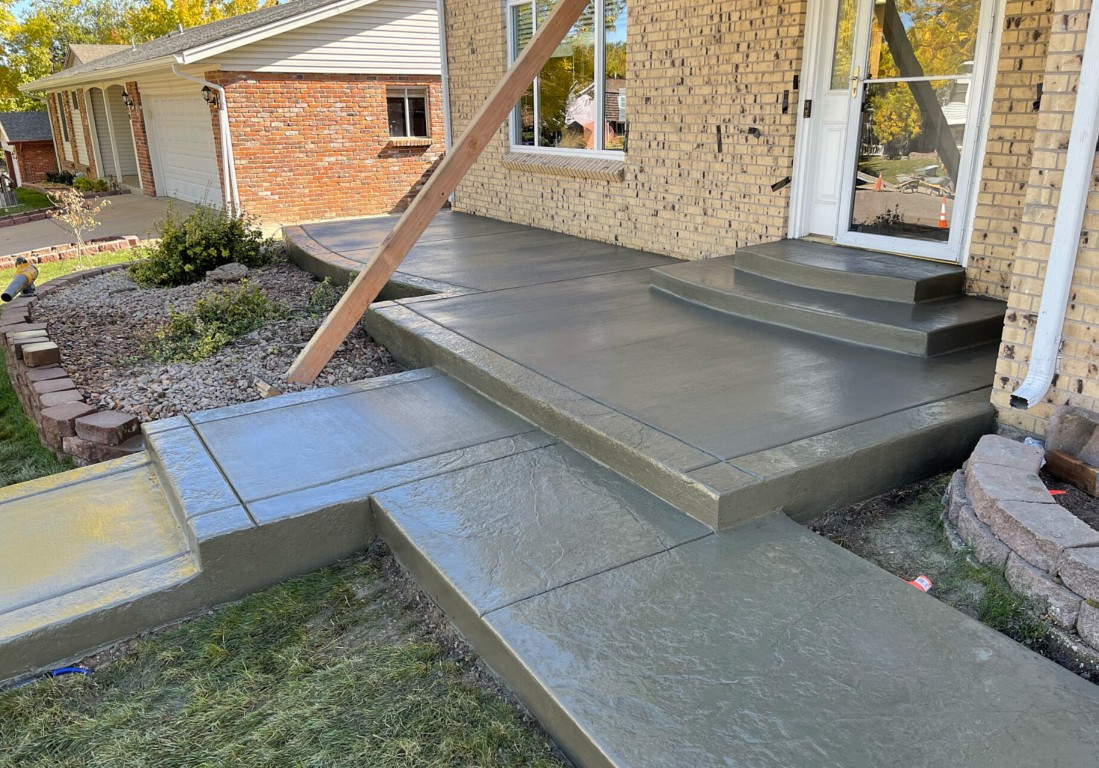
Entry steps connect your front or back door to grade level. These typically include a landing at the door and several steps down. Side entry steps provide access from driveways or yards. Basement or garage steps connect interior spaces to different levels.
We also build steps for terraced yards, retaining walls, and commercial properties. Each application has specific requirements. The installation quality matches what we deliver for walkways and other concrete flatwork.
How We Build Concrete Steps
Building concrete steps requires precision and experience. We start by calculating the total rise from bottom to top. This determines how many steps you need. Dividing the total rise by the number of steps gives us each step height. We adjust the numbers to meet code requirements.
Construction Steps
Footings support the weight of the steps and prevent settling. We dig below frost depth to stable soil and pour reinforced concrete footings. The footing width depends on step size and soil conditions. Proper footings prevent the common problem of steps pulling away from buildings.
Forms shape the concrete into steps. We build precise forms that create correct rise and run dimensions. The forms must be strong enough to hold concrete weight without bowing or shifting. Getting forms right takes skill and patience but ensures professional results.
Reinforcement goes into the forms before pouring. Steel rebar ties steps together and prevents cracking. We tie rebar into the footing and run bars through each step. This creates a monolithic structure that moves as one piece rather than individual steps that can separate.
The concrete pour must happen carefully. We place concrete from bottom to top, working it into the forms and around reinforcement. Each step gets properly consolidated to eliminate voids. The finishing creates texture for traction while keeping edges crisp and professional looking.
Curing is especially important for steps. They must develop full strength before use. We protect steps from temperature extremes and keep concrete moist during curing. Most steps can handle light foot traffic after 24 hours but need seven days before heavy use.
Concrete Steps Questions
Build Safe, Durable Steps
Contact Grover Beach Concrete for professional concrete steps and stairs. We provide free estimates and build to all code requirements. Call (805) 269-8516 to discuss your step project and get expert recommendations.
Call (805) 269-8516